
Teamwork is far more than just the ability to work in a group; it is a fundamental life skill developed from a very young age. It is essential for a child’s journey toward becoming a confident, empathetic, and successful adult. In today’s world, where collaboration and communication are keys to success in every field, understanding and practicing teamwork is more important than ever.
Football serves as one of the most powerful tools for teaching these skills. On the pitch, just as in life, no one wins alone.
Communication and Social Skills: “Talk on the Pitch!”
Teamwork, and football in particular, helps children learn how to effectively communicate. On the field, communication is constant—calling for the ball, warning a teammate about an opponent, or coordinating a play. This teaches children to voice their thoughts clearly while also listening to and respecting the directions of others.
Through football, they learn to adapt to a group, respect diverse perspectives, and collaborate with peers from different backgrounds. Since every player has a specific role (attacker, defender, goalkeeper), children learn tolerance and the value of every individual contribution
Developing Empathy and Respect: “We Are One Team”
Within a team, children face various emotions and viewpoints. When a player makes a mistake, the others learn how to offer support instead of criticism. This fosters empathy—the ability to step into someone else’s shoes and understand their feelings.
Football teaches kids to be kinder, more patient, and respectful of differences. Respect is reinforced through the post-match handshake with opponents, honoring the referee’s decisions, and maintaining loyalty to teammates.
Problem-Solving Under Pressure: Tactical Thinking
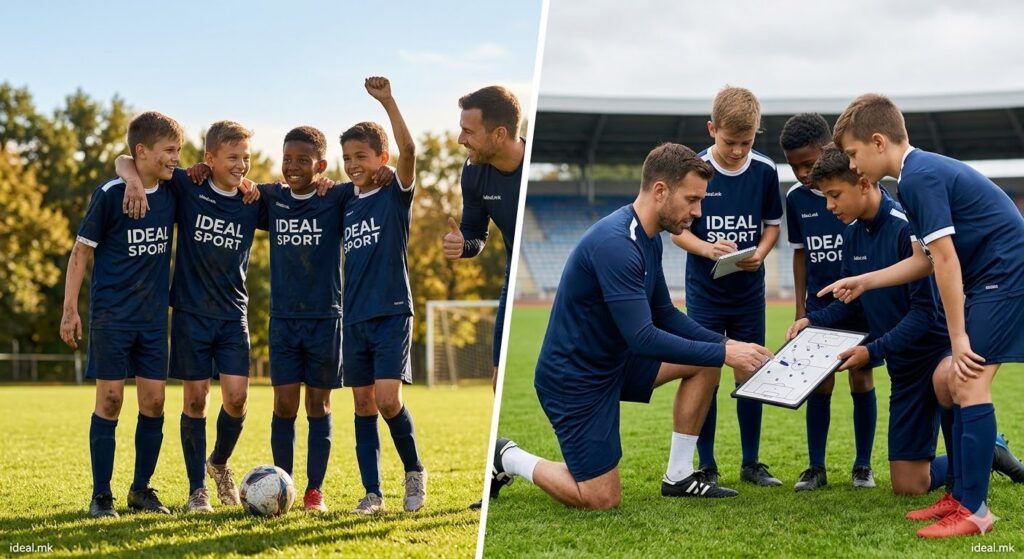
When working in a group, children constantly face challenges. In football, they must react quickly, make decisions under pressure, and find collective ways to bypass an opponent or protect their goal. This develops critical thinking, encourages the exchange of ideas, and teaches them to learn from mistakes—for instance, when a tactic fails, the entire team must adjust together.
Building Confidence and Belonging: Your Role Matters
Teamwork helps children feel valued and essential to the group. When every member contributes to a common goal—whether by scoring, defending, or making a key pass—they develop a sense of self-worth.
Belonging to a team and sharing victories and defeats creates strong emotional bonds. Positive feedback from teammates and coaches reinforces their belief in their own abilities.
Handling Conflict and Failure: Lessons from Defeat
In any team, disagreements are inevitable. Football is an emotional game, and minor conflicts over a pass or a position are common. Teamwork teaches children how to resolve these issues peacefully, find compromises, and prioritize the team’s well-being.
Furthermore, football teaches a vital life lesson: resilience. After losing a match, the team learns not to blame one another, but to analyze their mistakes together and focus on the next challenge.
How Parents Can Support the Journey
Parents play a crucial role in nurturing these teamwork skills:
- Encourage Sports Participation: Enroll your child in football or other team sports.
- Focus on Cooperation, Not Just Winning: Praise them when they cooperate well, help a teammate, or show fair play.
- Model Collaboration: Be an example of good cooperation in your own interactions with others and the coaches.
- Teach Sportsmanship: Discuss the importance of respecting the opponent and the referee.
- Be a Positive Spectator: Cheer for the whole team, not just your own child
Conclusion
Teamwork is an essential skill for child development, and football is an extraordinary tool for mastering it. It helps children grow into confident, empathetic, and successful adults. Through sport, they learn the most important lessons that will benefit them throughout their entire lives—both on and off the pitch.
Leave a Reply